Updated October 20, 2026
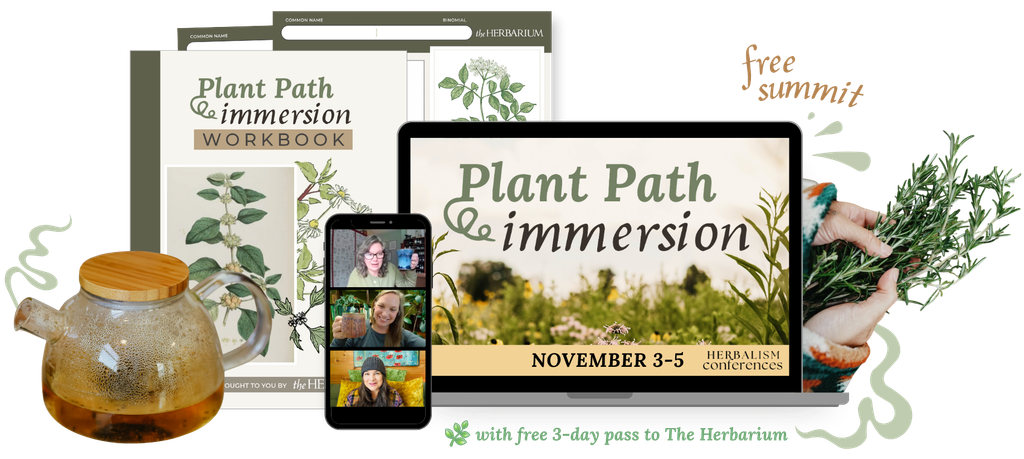
Quick overview: Plant Path Immersion is a free, three-day online herbalism summit taking place November 3–5, 2026. Organized by Herbalism Conferences, the event introduces 12 plants through guided lessons, observation, journaling, and materia medica building.
If you’ve ever felt overwhelmed by the number of herbs you could study, you’re not alone.
One book introduces twenty plants. Another course recommends learning fifty. Before long, your notebook is filled with names, traditional uses, and scattered facts—but you may still feel unsure how to study a single herb with confidence.
What if you approached herbal learning differently?
Instead of trying to remember everything about dozens of plants, you could spend time getting to know just a few.
That’s the idea behind Plant Path Immersion 2026, a free online gathering designed to help herbal learners explore twelve plants in greater depth.
For beginners who enjoy thoughtful, structured learning, this could be a helpful opportunity to begin or expand a personal materia medica.
What Is Plant Path Immersion?
Plant Path Immersion is a free, three-day online educational summit organized by Herbalism Conferences, in collaboration with the Herbal Academy and The Herbarium.
The event takes place November 3–5, 2026.
Rather than covering a large number of herbs quickly, the summit focuses on studying twelve selected plants through guided presentations and reflective learning activities.
Participants are encouraged to explore plant characteristics, traditional uses, herbal energetics, and their own observations.
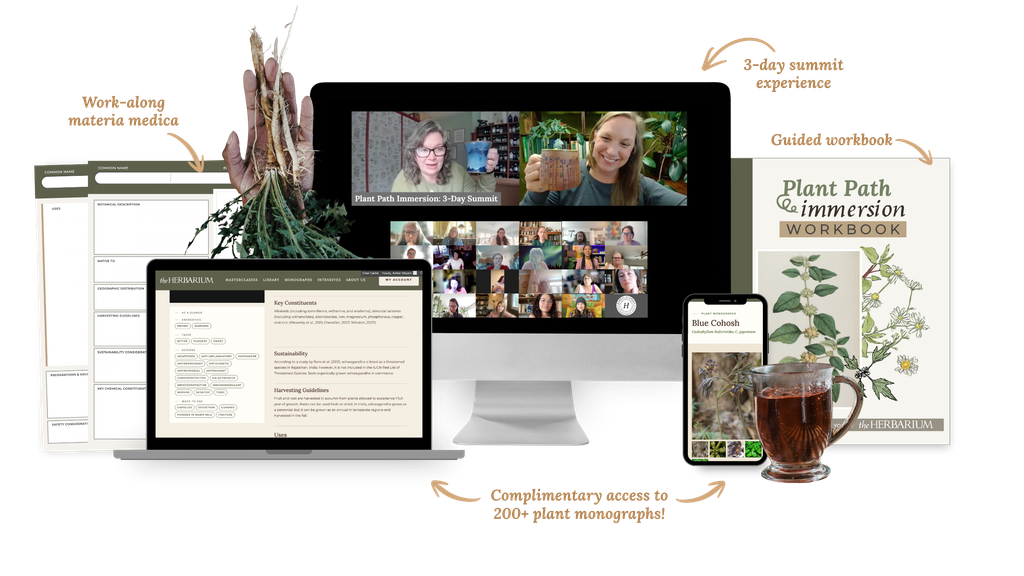
Throughout the sessions, attendees will also begin building a personal materia medica—a collection of organized notes about individual herbs.
The event brings together experienced herbal educators and offers temporary access to The Herbarium, an online herbal learning library containing more than 200 plant monographs.
Event details at a glance
- Event: Plant Path Immersion 2026
- Dates: November 3–5, 2026
- Location: Online
- Cost: Free during the event access window
- Format: Livestreamed educational sessions
- Featured plants: 12
- Learning focus: Plant observation, herbal energetics, traditional uses, and materia medica building
- Organizer: Herbalism Conferences
Explore the Free Plant Path Immersion
Why Learning One Herb at a Time Can Be Helpful
One of the biggest challenges for beginning herbal learners is knowing where to focus.
You might find yourself reading about chamomile in the morning, researching lemon balm in the afternoon, and saving articles about nettle before bed.
There’s nothing wrong with being curious about many plants. But collecting information isn’t always the same as developing understanding.
A more focused approach gives you space to ask useful questions:
- What does this plant look and smell like?
- Which plant parts are commonly discussed in herbal references?
- What are its traditional uses?
- What does credible research say about those uses?
- What safety considerations are important?
- How would I organize this information so I can find it again?
Rather than memorizing everything, you’re building a reference that can grow over time.
This is also the idea behind a personal materia medica.
Related reading: How to Research an Herb for Your Materia Medica
What Will You Learn During Plant Path Immersion?
The summit is organized into three themed days. Each day introduces four plants and explores a different area of traditional herbal study.
Day 1: Nervous System and Resilience — November 3
The first day focuses on plants traditionally discussed in connection with calm, resilience, nourishment, and restorative herbal practices.
The featured plants are:
Skullcap
Skullcap is included in a session exploring nervines, a traditional herbal category associated with the nervous system. This is an opportunity to learn how herbal educators discuss plant properties, traditional applications, and safety.
Lemon Balm
Lemon balm is a fragrant herb often encountered in beginner herbalism resources. Its session offers a chance to explore the plant more carefully rather than relying on a short list of supposed benefits.
Milky Oats
Milky oats will be explored alongside the idea of restorative herbal nourishment. Learners can pay attention to plant identification, plant parts, traditional terminology, and how educators describe preparation methods.
Ashwagandha
Ashwagandha appears in the restorative builders session. Because it may interact with medications and has important safety considerations, careful research is especially valuable.
Day 1 also includes a session on building a materia medica through herbal energetics and an organoleptic approach—learning through observation and sensory characteristics.
Day 2: Digestive System and Integration — November 4
The second day explores traditional herbal approaches to digestion, including carminatives and bitters.
Four featured plants form the core of the day:
Chamomile
Often recognized for its flowers and familiar tea preparations, chamomile is a useful example of why plant identification, botanical family, and allergy information belong in a materia medica entry.
Ginger
Ginger provides an opportunity to learn about a familiar culinary plant and distinguish traditional herbal uses from findings supported by modern research.
Dandelion
Dandelion is frequently discussed in traditional herbal education. Studying the plant carefully means identifying the botanical species, relevant plant parts, and differences between food uses and medicinal claims.
Tulsi
Tulsi, often called holy basil, introduces another plant with a long history of traditional use. It is also an opportunity to record cultural context and botanical identification accurately.
Day 2 includes a discussion of herbal recipes, rituals, and using materia medica information in formulation.
For beginners, the most useful goal is not necessarily to prepare a complicated herbal blend immediately. It is to understand how educators organize information and make decisions.
Day 3: Immune System and Vitality — November 5
The final day explores nutritive plants, traditional immune-support discussions, and seasonal herbal practices.
The featured plants are:
Nettle
Nettle is often discussed as a nutritive plant. It can provide a useful starting point for recording plant identification, traditional preparations, and relevant precautions.
Rosehip
Rosehips provide an opportunity to explore seasonal plant materials, harvesting considerations, botanical characteristics, and nutritional information.
Reishi
Reishi introduces the world of medicinal fungi. It’s particularly important to identify which species and preparations are being discussed and avoid treating laboratory findings as proven clinical benefits.
Elder
Elder offers a chance to learn about plant parts, preparation requirements, and safety. Some parts of elder plants can be toxic, making accurate identification and preparation knowledge especially important.
The final sessions also explore ways herbal learners might incorporate seasonal observation and traditional plant study into a continuing practice.
What Is a Materia Medica?
A materia medica is a collection of information about medicinal substances. In herbalism, it commonly refers to organized profiles of individual plants.
Think of it as a personal reference library.
Instead of keeping scattered bookmarks and handwritten notes in different places, you create a structured record for each herb.
A beginner’s materia medica entry might include:
- Common and botanical names
- Plant family and identifying characteristics
- Plant parts discussed in herbal references
- Traditional uses and their cultural context
- Herbal energetics, where relevant
- Preparations described in educational sources
- Contraindications, interactions, and safety information
- Research sources
- Your observations and questions
You don’t need to complete every section in one sitting.
A useful materia medica is built gradually, as your understanding becomes more detailed.
How to Prepare for Plant Path Immersion
You don’t need an elaborate study system to benefit from the summit.
A notebook, access to the online sessions, and a few focused questions are enough to begin.
Here is a simple preparation routine.
Step 1: Choose your learning goal
Before the event, decide what you hope to understand better.
Perhaps you want to recognize common herbal terminology, learn how to research individual plants, or create your first four materia medica entries.
One clear goal can make the sessions feel more manageable.
Step 2: Set up a simple plant study template
Create a separate page for each herb you want to study.
Start with these headings:
- Plant name
- Botanical name
- Identification notes
- Sensory observations
- Traditional uses
- Research and sources
- Safety considerations
- Questions to explore next
Leave space for new information.
Step 3: Focus on questions, not perfect notes
You don’t need to capture every sentence a teacher says.
Instead, listen for ideas that help you answer your original questions.
For example:
What information would help me distinguish this plant from a similar species?
Which claims are based on traditional practice, and which have clinical evidence?
What would I need to research before considering an herbal preparation?
These questions help turn passive watching into active learning.
Step 4: Review your notes after each session
Take ten minutes to review what you’ve written.
Highlight the most useful information, mark unanswered questions, and record the sources you want to revisit.
Your notes don’t need to be beautiful. They need to be understandable when you return to them.
Step 5: Build your materia medica over time
The end of the summit doesn’t have to be the end of your learning.
You might continue by choosing one plant each week, checking additional sources, and improving its profile.
That approach can transform three days of presentations into an ongoing herbal study practice.
How The Herbarium Fits Into the Event
The Herbarium is the Herbal Academy’s online educational reference library.
According to the event organizers, Plant Path Immersion participants will have access to The Herbarium during the November 3–5 summit.
The library includes more than 200 plant monographs, along with masterclasses and other herbal education resources.
A plant monograph brings information about a particular plant into one organized reference.
When using a monograph, consider recording the source, author, publication information, botanical name, and any supporting references.
It’s also helpful to compare more than one reliable resource—especially for claims involving safety or treatment.
Important: The complimentary access described by the organizers is limited to the event window. Continued access may require a separate membership or event pass.
A Simple Three-Day Herbal Study Plan
You don’t have to finish twelve complete plant profiles in three days.
A gentler approach might be:
Day 1 — Observe
Choose one plant from the first day’s sessions. Record its botanical identity, characteristics, and questions.
Day 2 — Research
Choose one plant from the digestive-system sessions. Compare information from the presentation with a trustworthy monograph.
Day 3 — Organize
Choose one plant from the final day’s sessions. Then review your notes and make a simple plan for continuing your materia medica.
By the end, you can have three developing plant profiles and a repeatable method for studying future herbs.
That’s meaningful progress without turning your learning into another overwhelming task.
A Helpful Companion: The Beginner Materia Medica Builder
If you prefer structured pages instead of starting from a blank notebook, a materia medica template can help.
The Calm Herbalist’s Beginner Materia Medica Builder is designed as a practical study companion for organizing plant research, observations, source notes, and questions.
You can use a structured template during an online herbal class, while reading a monograph, or as part of a weekly independent study routine.
Explore the Beginner Materia Medica Builder — $9
A template won’t replace careful research or qualified teaching, but it can make the process of collecting and reviewing information much easier to manage.
Frequently Asked Questions
Is Plant Path Immersion free?
Yes. The organizers describe the November 3–5, 2026 event as a free online summit. Optional paid access upgrades are available for those who want additional features or longer-term access.
Is Plant Path Immersion suitable for beginners?
The event’s guided plant-study approach may be useful for beginners, especially those interested in learning how to develop a materia medica. Some terminology may be unfamiliar, so keeping a question list can help.
What herbs will be covered?
The twelve scheduled plants are Skullcap, Lemon Balm, Milky Oats, Ashwagandha, Chamomile, Ginger, Dandelion, Tulsi, Nettle, Rosehip, Reishi, and Elder.
Do I need to know herbalism before attending?
The event is presented as a guided educational experience. You can approach it with beginner-level questions and focus on understanding the foundational ideas.
Can I watch the sessions later?
The organizers say replays will be available in the conference hub through November 5, 2026, at 11:59 p.m. Eastern Time. Longer-term replay access is offered through optional upgrades.
Do I need to buy a materia medica workbook?
No. You can use an ordinary notebook or document. A structured workbook is optional and may be helpful if you prefer consistent headings and organized study pages.
Can I use these herbs to treat a health condition?
The event is educational. Traditional herbal uses should not be treated as proof that an herb is effective or safe for a particular condition. Herbs may have adverse effects or interact with medications. Consult an appropriately qualified healthcare professional before using herbal products for medical purposes.
Final Thoughts: Begin With Curiosity, Not a Perfect Notebook
Learning herbalism doesn’t have to mean memorizing hundreds of plants.
Sometimes, a more meaningful beginning is choosing one herb, asking a useful question, and taking the time to understand what you’ve found.
Plant Path Immersion offers a guided opportunity to explore that kind of learning.
Whether you attend all three days or focus on a handful of sessions, consider using the experience to begin a study practice that lasts beyond the event itself.
You don’t need to know everything about a plant today.
You only need a thoughtful place to begin.
Explore Plant Path Immersion 2026
Affiliate disclosure: Some links on The Calm Herbalist may be affiliate links. If you purchase through an affiliate link, we may earn a commission at no additional cost to you. We recommend resources based on their relevance to thoughtful herbal learning.
Educational disclaimer: The information provided is for educational purposes only and is not a substitute for professional medical advice, diagnosis, or treatment.